Transparency: This post contains affiliate links. If you book or buy something through these links, I may earn a small commission at no extra cost to you. This helps keep the site running!
Introduction
Imagine watching the final glimmers of sunset catch the sails of the Sydney Opera House as city lights begin to twinkle across the harbour. The air is warm, the water laps gently against the quay, and you realize you are finally standing in one of the world’s most iconic cities.
As someone who has fallen in love with Sydney over multiple trips (and is already planning the next!), I know that while the city has a special magic, mastering the logistics is the difference between a good trip and the trip of a lifetime.
This beginner’s guide is your step-by-step roadmap. From the best time to visit to essential packing tips, here is everything you need to know for your first amazing adventure Down Under.
1. When is the Best Time to Visit Sydney?
Photo by Muddasir Ali in Pexels
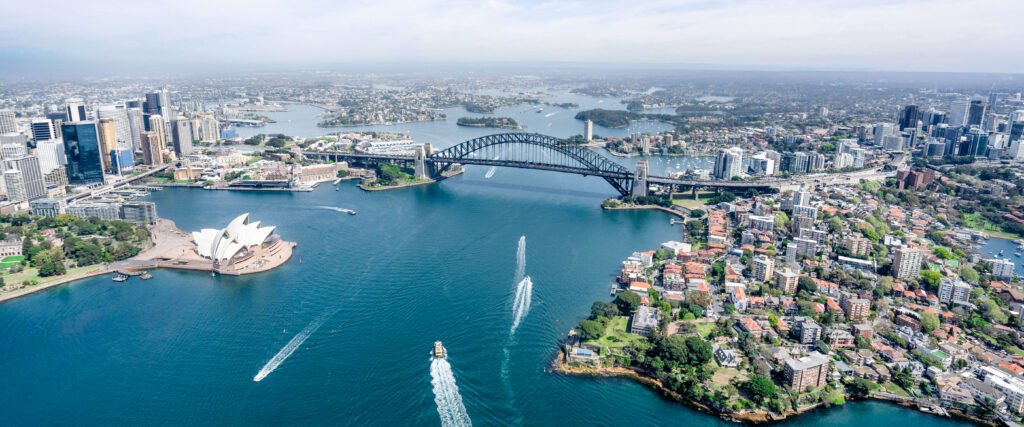
Aerial view of Sydney Harbour with the Opera House and Harbour Bridge.
First things first: if you’re visiting from the Northern Hemisphere, prepare to have your internal calendar flipped upside down.
In Australia, summer starts in December. Yes, that means Christmas is spent having a BBQ on the beach rather than roasting chestnuts by an open fire!
While Sydney is a year-round destination (it rarely gets freezing cold), the “vibe” changes completely depending on when you land. Here is my quick cheat sheet to help you pick the perfect time for your trip:
- ☀️ Summer (Dec – Feb): The Party Season
Hot, humid, and absolutely buzzing with energy. This is when the beaches are packed and the lifestyle is at its peak. However, be warned: this is also when prices for flights and hotels skyrocket. - 🍂 Autumn (Mar – May): The Sweet Spot
The humidity drops, but the water is often still warm enough for swimming early in the season. The city turns beautiful shades of orange and gold, making it great for walking tours. - ❄️ Winter (Jun – Aug): Cool & Cultural
Don’t worry, it doesn’t snow in Sydney! It gets crisp (think leather jacket weather), but the skies are often crystal clear. This is the best time for sightseeing without sweating, and it hosts the incredible Vivid Sydney light festival. - 🌸 Spring (Sep – Nov): The Winner
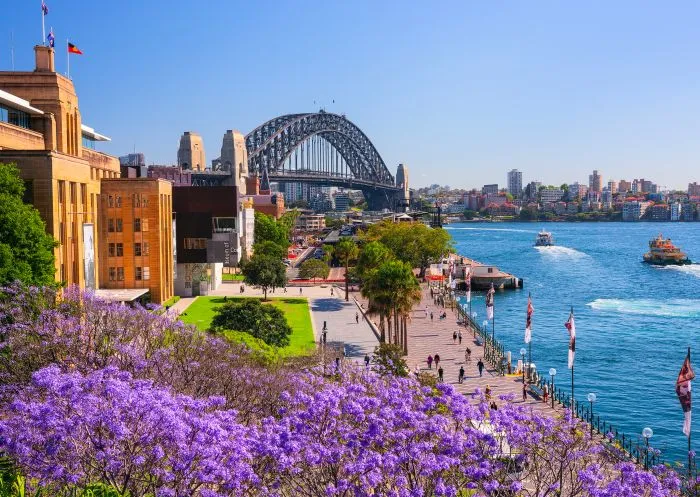
My personal favorite time to visit! The weather is perfect—warm days and cool nigotohts—and the crowds haven’t arrived yet. Plus, the city turns purple when the famous Jacaranda trees bloom.
A Quick Tip on Budget
If your wallet is watching, avoid the “Peak Season” of late December and January. You will pay a premium for everything.
Instead, aim for the “Shoulder Seasons”(October/November or March/April). You get 90% of the great weather for about 70% of the price. I use Expedia to check rates during these months to find the best drop in prices. The Shangri-la Sydney has a great view of the Sydney Harbour. The photo below is from one of the guest rooms facing the harbour.
2. Securing Your Visa: The Non-Negotiable First Step
Let’s rip the band-aid off quickly: paperwork is boring, but getting turned away at the airport is worse.
Here is the golden rule of Australian travel: Unless you are an Australian or New Zealand citizen, you need a visa to enter the country. There are no exceptions, even for a short holiday.
Photo by Dohyuk You on Unsplash
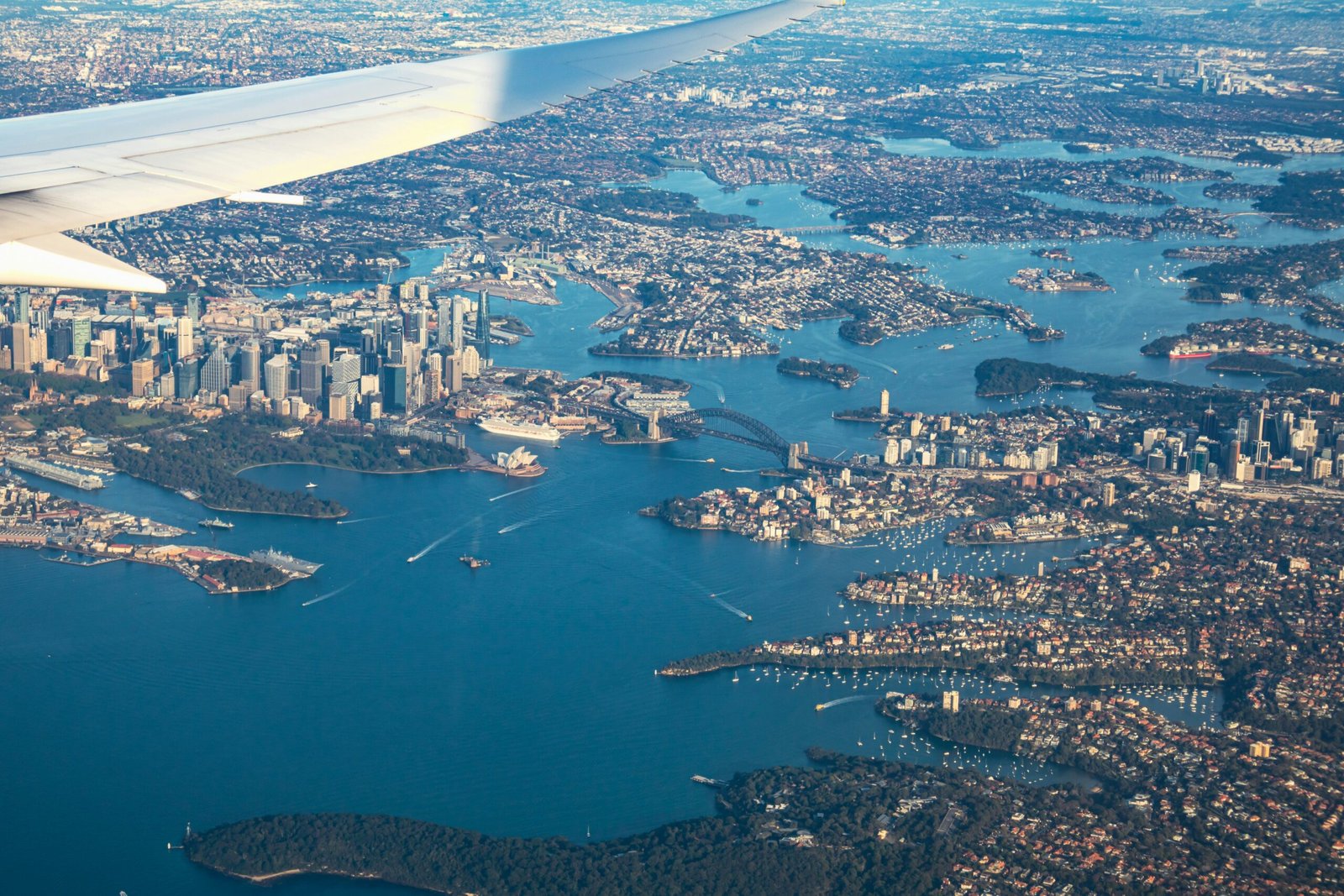
Flying over the Sydney Harbour
So here are the Australia visa requirements for tourists. The good news is that for most travelers, the process is entirely online and surprisingly fast. Depending on your passport, you will fall into one of two categories:
- The “Express Lane”: The Electronic Travel Authority (ETA)
If you hold a passport from the USA, UK, Canada, Japan, or many European countries, you are in luck. You likely qualify for the ETA (Subclass 601).- Speed: It is usually approved within 24 hours (often instantly).
- How to apply: You can check the full list of eligible countries here and apply directly via the official Australian ETA portal.
- Processing info: Click here for details on ETA processing.
- The Standard Route: The Visitor Visa (Subclass 600)
If your country isn’t on the ETA list, don’t panic! You just need the standard Visitor Visa.- Speed: This takes a bit longer—usually several weeks—so do not leave this until the last minute. Apply as soon as you book your flights.
- How to apply: You can start your application at the Visitor-600 Portal here.
Important: The “Invisible” Visa
Australia has a modern, label-free system. You will notget a physical stamp or sticker in your passport. The visa is digitally linked to your passport number.
🛂 My Pro Tip:
Even though it’s digital, technology can sometimes fail (and airport Wi-Fi is notoriously flaky!). Always keep a copy of your visa grant notification. Save a screenshot on your phone and print a physical copy to keep in your carry-on. It’s better to have it and not need it!
3. Where to Stay in Sydney: A Neighborhood Guide for First-Timers
Now for the fun part! Sydney is a “city of villages,” and where you choose to sleep will completely change the vibe of your trip.
Whether you want to wake up to the sound of crashing waves or have the Opera House right outside your window, here is my breakdown of the best neighborhoods to call home:
🏙️ Circular Quay & The CBD (The “Iconic” Choice)
If this is your first visit and you want that “pinch me, I’m in Australia” feeling, stay here. You are walking distance to the ferries, the Opera House, and the Royal Botanic Garden.
Best For: First-timers who want to be in the center of the action.
Photo by Jay Wellington on Unsplash
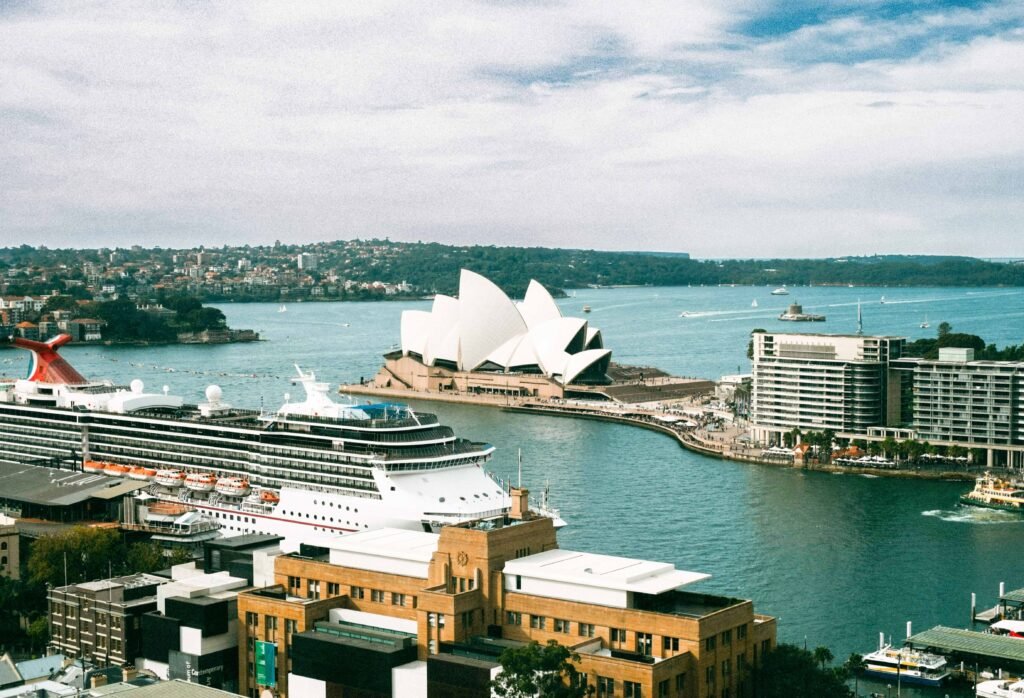
View out of a hotel window beside Circular Quay
🧱 The Rocks (History & Charm)
Just a short walk from the quay, this is Sydney’s oldest neighborhood. Think cobblestone laneways, historic sandstone buildings, and some of the city’s oldest (and best) pubs. It feels European but looks distinctly Australian.
Best For: History buffs and couples looking for romance.
🌊 Bondi Beach (Sun & Surf)
Want to live like a local? Bondi is world-famous for a reason. It has a laid-back, barefoot culture with incredible brunch spots and the ocean at your doorstep. Just remember, it’s about 30-40 minutes from the city center.
Best For: Beach lovers and those who want a relaxed holiday.
☕ Surry Hills (The Cool Crowd)
This is the Brooklyn or Shoreditch of Sydney. It’s leafy, trendy, and absolutely packed with the city’s best coffee shops, wine bars, and restaurants. You won’t see many tourists here, just stylish locals.
Best For: Foodies and boutique shoppers.
Other Great Options:
- Darling Harbour: Perfect for families, with the Aquarium and Zoo right next door. (Family friendly accommodations here.)
- Manly: A ferry ride away from the city; it feels like a separate beach holiday town. (Manly accommodations here.)
- North Sydney: Just across the bridge; offers incredible city skyline views often for a lower price. (Accommodations in North Sydney here.)
🏠 What about Airbnb or Vrbo?
If you prefer having a kitchen or are traveling with a large group, apartment rentals are a great alternative. Here are some options. Just be aware that in popular areas like Bondi, a good Airbnb or Vrbo can sometimes cost as much as a hotel!
4. Getting to Sydney & The Long-Haul Flight
Let’s be honest: unless you are reading this from New Zealand, getting to Australia is a trek. But I promise you, the moment you step out of the airport into that Sydney sunshine, every hour in the air will feel worth it.
Most international flights land at Sydney Kingsford Smith (SYD). You have plenty of great options for getting here, including Delta, Qantas, Air New Zealand, Air Canada, American Airlines, Emirates, Qatar, British Airways, Singapore Airlines, and JAL, to name a few.
✈️ Finding the Deal: Ticket prices can vary wildly. I always use a tool like Expedia to compare flight deals and book a ticket.
Photo by Jeffrey Saturnus on Pexels
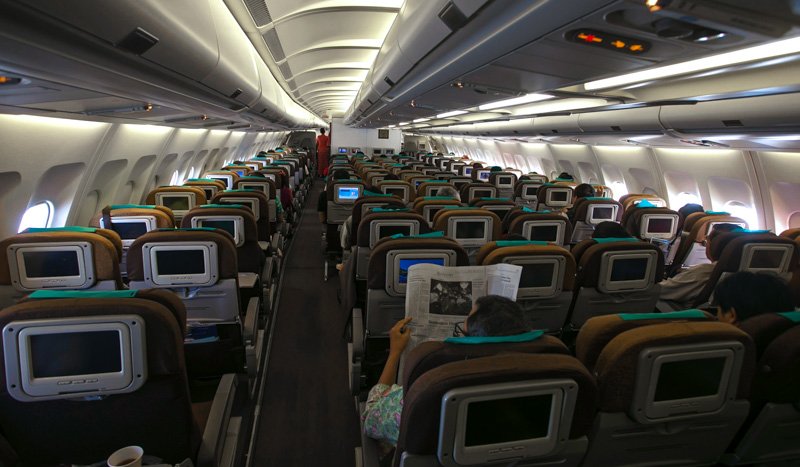
The Long-Haul Survival Kit
I’ve done this flight more times than I can count. Being ready for a long flight goes a long way.
Having the right gear is the difference between landing like a zombie or landing ready to explore. Do not board the plane without these:
- Noise-Canceling Headphones: There is always a crying baby. Always. Block it out. Here are the some good ones, including a couple I never fly without (Soundcore Q20 by Anker, and Bose’s Quiet Comfort).
- A Supportive Neck Pillow: Don’t rely on the flimsy airline ones. This neck pillow by Optixion, with firm, elevated support on both sides, actually keeps your head upright.
- Comfortable “Slip-On” Shoes: Your feet swell on long flights. Shoes that you can easily slide on and off are so practical when going through security and for comfort. These Sketcher Slip-in Glide Step are my go-to travel shoes, and there are many similar others available.
- Bluetooth Adapter: Wires used to get in the way when meals come and when I or someone in my row wants to go to the aisle. A bluetooth headphone or earbud adapter eliminates this. This low latency Qualcomm adapter is not only very practical when flying, it’s great for home use, too.
The moment the plane banks over the harbour and you glimpse that iconic bridge, every cramp and stale‑air moment suddenly disappears.
5. How to Get Around Sydney Like a Local
Sydney traffic can be… challenging. The good news? Sydney’s transport network is so smooth you may wonder why everyone owns a car. You rarely need a car to see the best parts of the city.
Top 5 ways to get around Sydney:
- 💳 Grab an Opal Card. It’s your golden ticket for trains, buses, ferries, and the light rail. Tap on, tap off, done. You can pick one up at the airport or any convenience store (7-Eleven). Note: You can also use your contactless credit card/Amex directly! Just tap on the readers!
- ⛴️ Hop on a Ferry. It’s public transport disguised as a sightseeing cruise. The run from Circular Quay to Manly gives million‑dollar views for just a few bucks—don’t skip it.
- 🚊 Trains + Metro + Buses. The train network is extensive and will get you from the airport to the city, or from the city to places like Bondi Junction, quickly and cheaply.
- Pro tip: Use directions in Google Map and select Public Transport (
 ) to get to your destination using train/metro/tram/bus. It shows walking directions to closest stations or bus stops, routes, connections, and schedules, giving you many options to get to destinations from your location.
- Pro tip: Use directions in Google Map and select Public Transport (
- 🚗 Rideshare: Uber and Didi are everywhere and generally cheaper than taxis.
- 🚙 Car Rental: Do you need a car? If you are staying in the city: No. Parking is expensive and traffic is heavy. However, if you plan to take a road trip to the Blue Mountains or the wineries in the Hunter Valley, a car is a must.
 ) to get to your destination using train/metro/tram/bus. It shows walking directions to closest stations or bus stops, routes, connections, and schedules, giving you many options to get to destinations from your location.
Photo by Henry Chan on Unsplash
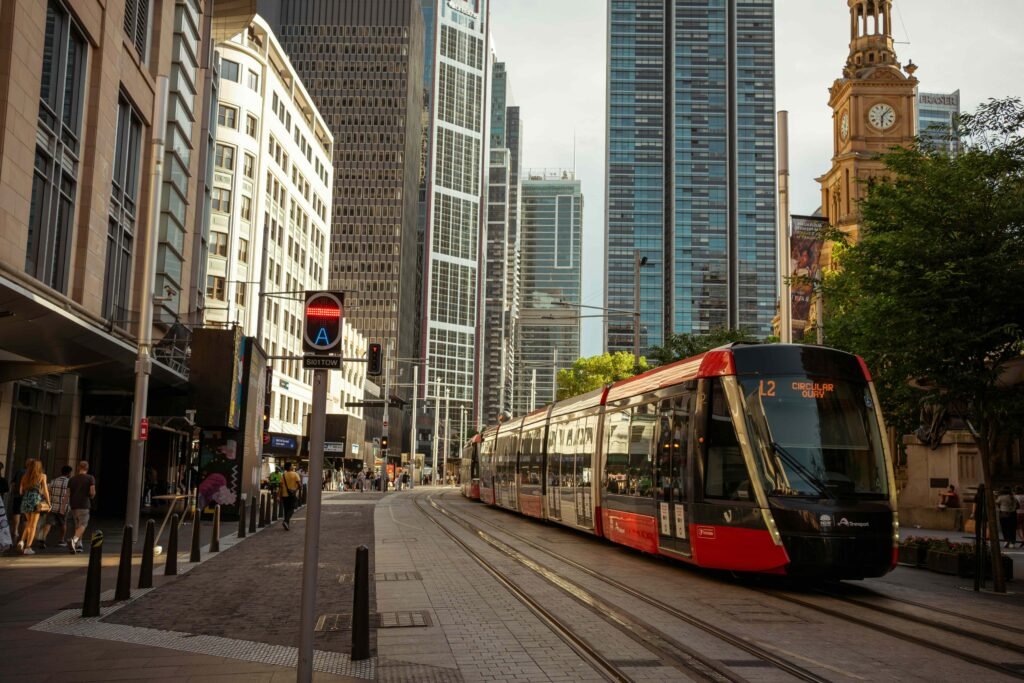
Sydney tram on George Street
6. What to Pack for the Sydney Climate
Australia in summer has a reputation for heat, but year round the sun here is different. Due to the thinner ozone layer, the UV index is extremely high. You can burn in 15 minutes even on a cloudy day.
The “No-Burn” Essentials:
- Australian-Strength Sunscreen. Don’t mess around with SPF 15. I recommend this high-SPF sunscreen that doesn’t feel greasy.
- A Wide-Brimmed Hat. Essential for beach days. This one packs flat in your suitcase.
- Sling Bag. Carrying your essentials will be convenient with a lightweight sling or shoulder bag. I recommend this practical one from Peak Design.
- Reusable Water Bottle. You need to stay hydrated all day. Look out for bubblers (drinking fountains) all around the city for refills. This lightweight, collapsible, BPA-free water bottle makes your rehydration easy to carry around.
- Universal Power Adapter. Australia uses Type I plugs (angled flat pins). Your US/UK plugs won’t fit. Grab a flexible universal adapter with USB ports for travel anywhere here. If you are a group and/or have many devices, you might want this. Both allow for US/EU/UK/AUS/Japan/South Africa standards.
- Power Bank. You will probably be out all day, but don’t want your phone to run out of power. Especially since it will be essential for getting around. This is the power bank I recommend, and it meets TSA travel standards. It’s not advertised for notebooks, but I’ve used it to extend the battery of my MacBook Pro on a long flight.
🧥 Pro Tip: Layers!
Even in summer, Sydney can get a cool southerly breeze in the evenings (locals call it the “Southerly Buster”). Always pack a light denim jacket or hoodie for night walks.
7. Money, Tipping, and Aussie Lingo
- Currency: We use the Australian Dollar (AUD). Sydney is an almost entirely cashless society. You can use your card for everything from a flat white coffee to a bus ride. I usually keep $50 cash on me for markets, but that’s it.
- Tipping: Leave your calculator at home! Tipping is not mandatory in Australia. Waitstaff are paid a living wage. However, for exceptional service at a nice restaurant, a tip of 10% is a lovely gesture, but never expected.
Speak Like a Local
Aussies love to shorten words. Here is your crash course in “Straya” slang:
- G’day: Hello.
- Arvo: Afternoon.
- No Worries: You’re welcome / It’s okay / No problem.
- Coldie: A cold beer.
- Macca’s: McDonald’s. (Yes, we really call it that. Look at the sign below!)
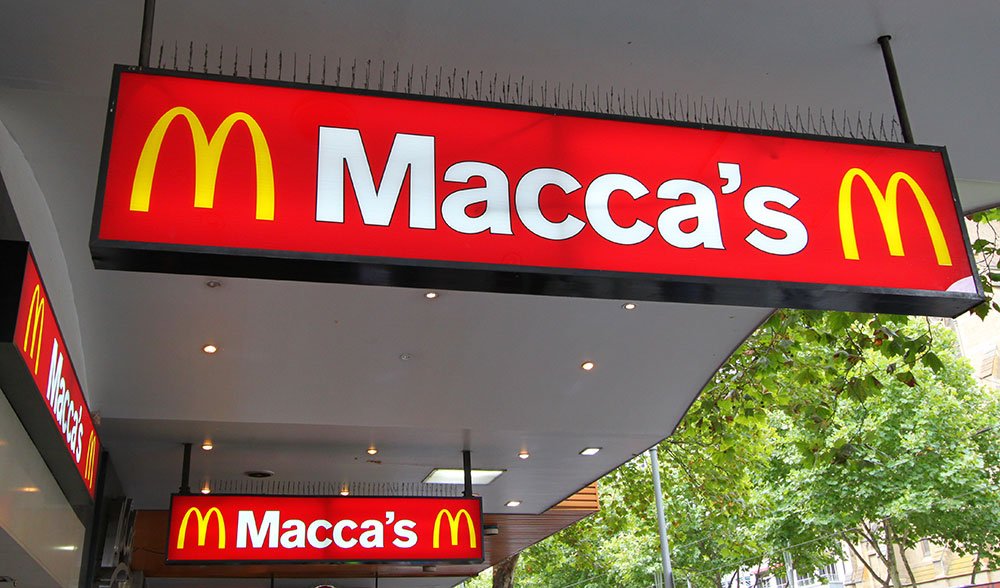
Once your wallet and words are sorted, you’ll feel less like a tourist and more like a local mate. Want to test your knowledge? Check out this fun Aussie slang self-test by Nomad’s World!
8. Staying Connected: SIM Cards & eSIMs
To navigate Sydney easily and share your moments (like that iconic Opera House selfie), avoid expensive international roaming fees. Instead, pick up a temporary, budget-friendly Australian data plan. Your main decision is between the digital convenience of an eSIM and the potential value or added features of a physical SIM.
Use this simple framework to determine the best choice for your specific needs:
| Feature | eSIM (Embedded SIM) | Physical SIM Card |
| Setup | Instant & Digital. Scan a QR code or use an app. No tools required. | Manual. Requires a SIM ejector tool and swapping tiny chips. |
| Availability | Buy online from home before you fly. | Buy at airport kiosks, city stores, or order by mail. |
| Phone Number | Usually Data-Only. (Most travel eSIMs do not give you a number). | Includes Local Number. Great for calling taxis, hotels, or restaurants. |
| Primary Benefit | Keeping your home number active (for 2FA/bank texts). | Usually cheaper per GB for large data amounts. |
Still undecided? First, check your phone’s settings to confirm if it supports eSIMs.
- Ready to choose?: Check out this guide for a deeper comparison of highly-rated options.
9. Tips for Photographers (including smart phone photography)
Sydney is a photographer’s playground. The light here is crisp and sharp.
Photo by Buddy Moran
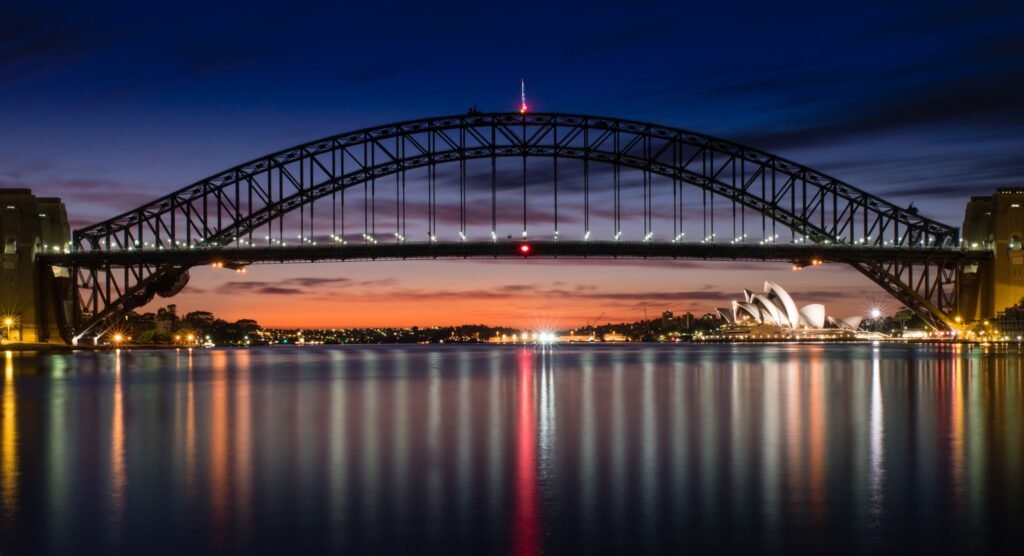
Sydney Harbour Bridge framing the Opera House and early dawn sky.
If Instagram had an award for naturally flattering light, Sydney would win it—here’s where to catch it:
- The Opera House: For the best silhouette shots, go at sunrise. The sun comes up behind the Opera House when viewed from the Harbour Bridge side.
- The Harbour Bridge: Makes a good frame of the orange morning sky with the Opera House from the end of the Blues Point Road just before the sun comes up. It’s a colorful, serene view of the harbour early in the morning.
- Circular Quay at Night: Don’t put your camera away when the sun goes down. The harbour lights are magical.
Others: - Bondi to Coogee walk: For endless ocean curves and sea‑pools.
- The Pylons on Harbour Bridge: Panoramic skyline shots without the climb ticket.
- Barangaroo Reserve at sunset: Locals picnicking, ferries gliding by, perfect texture light.
Photo by Mark Dunham from Unsplash
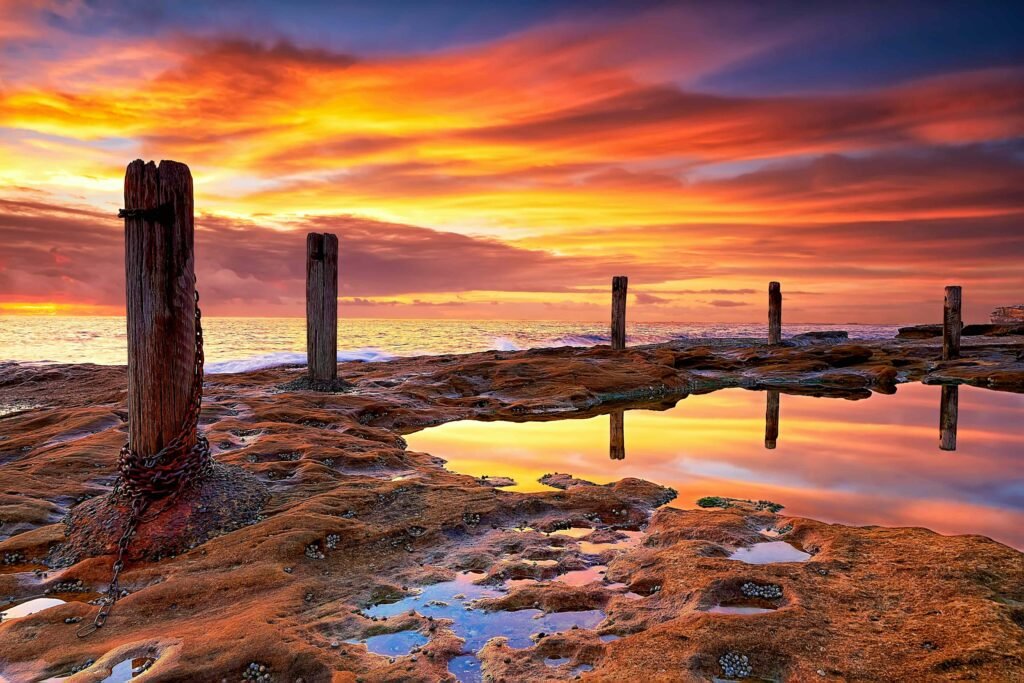
Ivo Rowe Rock Pool, Bunya Parade, Coogee – a scenic walk south of Bondi Beach
📷 Pro tips:
1. Make sure you have a sturdy tripod when taking night photos. I’ve had this Manfrotto travel tripod for about 10 years, and it is still going strong. With the newer mirrorless cameras, there are many other options that don’t need to support so much weight.
2. You can take good night photos from your hotel room with the use of a collapsable, anti-reflection lens hood.
10. My Top Tip for First-Time Visitors
If you only take one piece of advice from this guide, let it be this: Use the ferry system!
It is technically public transport, but it offers the best views of the harbour for just a few dollars. Take the ferry from Circular Quay to Manly. You get 30 minutes of cruising past the Opera House, the Bridge, and the harbour heads. It is the cheapest “harbour cruise” you’ll ever find, and it’s an absolute must-do. You can also take a ferry through the Parramatta River with many riverside views of Greater Sydney.
I hope this first‑timer’s guide helps you fall for Sydney the way I did—sun‑kissed, jet‑lagged, and utterly enchanted. There are so many “Sydney moments” that never grow old.
Conclusion
Sydney is one of those rare cities that actually lives up to the hype. It’s beautiful, it’s laid back, and it’s ready to welcome you with a “G’day.”
Now that you have the essentials sorted—from visas to packing lists—it’s time for the fun part.
Ready to fill your itinerary?
Check out my detailed guide here: Link to be added: 12 Unforgettable Things to Do in Sydney to discover the best activities, tours, and hidden gems for your trip
